|
Since 2021, I have been participating in the TAO Project as an Electrical Engineer. From the moment I first learned about this project, I felt that working at an observatory of this caliber was a dream that, over time, became a reality. This aspiration originated in my childhood fascination with observing the stars and understanding the mysteries of the universe.
| |
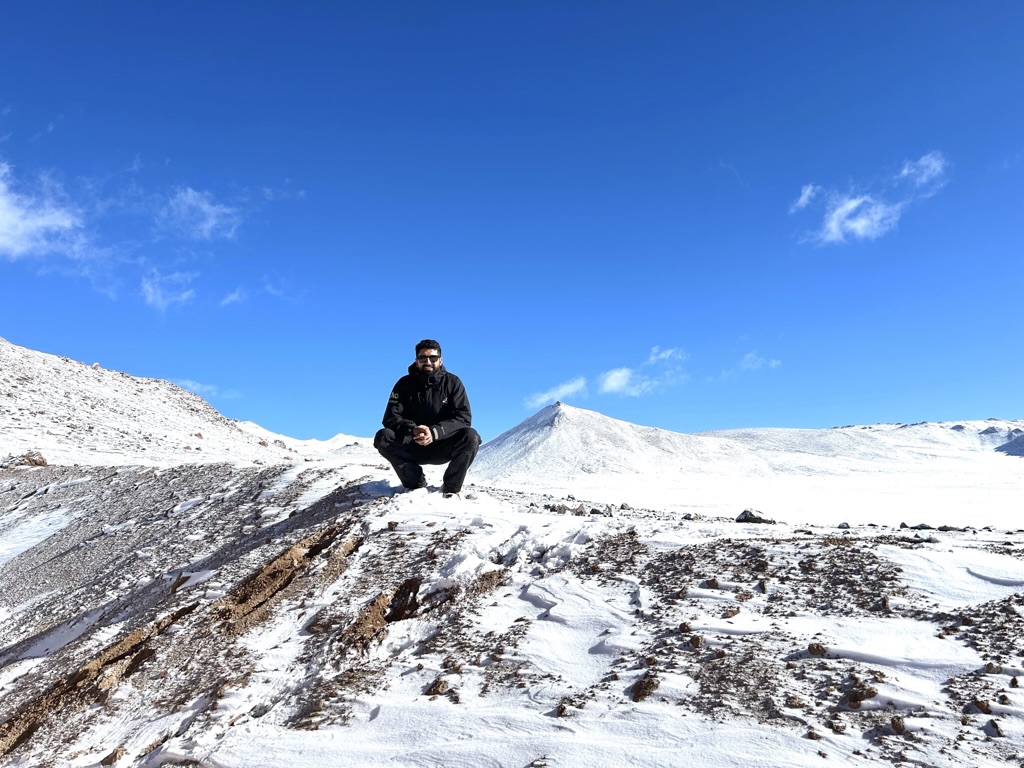
▲The author taking a commemorative photo halfway up Co. Chajnantor (at an elevation of 5000m) |
Long before joining the TAO Project, while working on the CLASS Project located at Cerro Toco and operated by Johns Hopkins University, I would often look toward Cerro Chajnantor and imagine the challenge and significance of contributing to a project of such magnitude and international recognition.
I would also like to express my sincere gratitude to my alma mater, Universidad Católica de la Santísima Concepción, which, together with the support and guidance of Professor Ricardo Bustos Placencia, played a fundamental role in my academic and professional development. Through this education, I came to understand the importance of the engineer’s role within a world-class scientific institution such as an astronomical observatory, where technical responsibility, innovation, and collaborative work are essential to the advancement of science and technology.
Later, I accepted a professional opportunity at Pontificia Universidad Católica de Chile and had the privilege of joining the highest astronomical observatory in the world, becoming the first Chilean engineer to work at this observatory. I joined the project during its construction phase, a particularly challenging stage that required addressing and integrating significant differences between Chilean and Japanese electrical standards, both from technical and operational perspectives. This experience enabled me to develop a broader understanding of engineering within international projects and strengthened my adaptability, leadership, and problem-solving skills in highly demanding multicultural environments.
| |
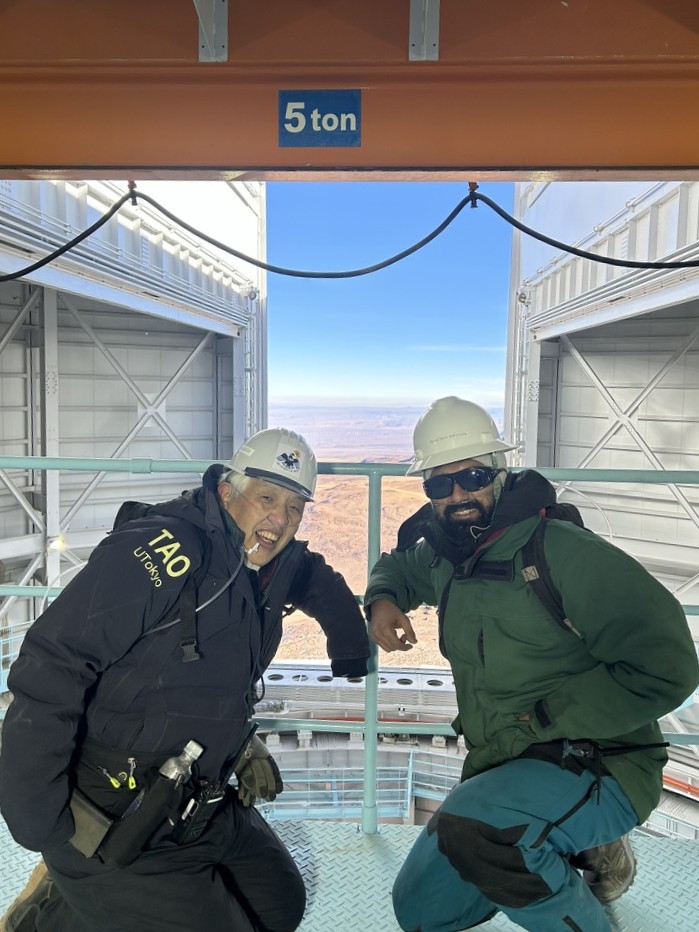
▲The author (right) and the Director of Atacama Observatory, Miyata (left), in the enclosure building at the summit |
Working alongside Japanese professionals has been an enriching experience both professionally and personally. As a Chilean professional, I have had the opportunity to learn from a work culture characterized by discipline, respect, careful planning, and a strong commitment to excellence. Throughout this journey, the support and guidance of Professor Kazuya Matsubayashi have been invaluable in helping me better understand Japanese culture and adapt to its professional environment, communication style, and work philosophy. Thanks to his mentorship, I have been able to perform with confidence in a high-level international environment, strengthening not only my professional capabilities but also my personal growth.
Currently, my role as Lead Engineer for Chile at TAO has demonstrated that, through dedication, responsibility, and perseverance, it is possible to overcome extraordinary challenges associated with operating critical systems under extreme altitude and technical conditions. Today, I am responsible for supervising essential systems and equipment that must remain operational 24 hours a day, 7 days a week, ensuring the continuity of project operations and the proper scientific functioning of the observatory.
| |
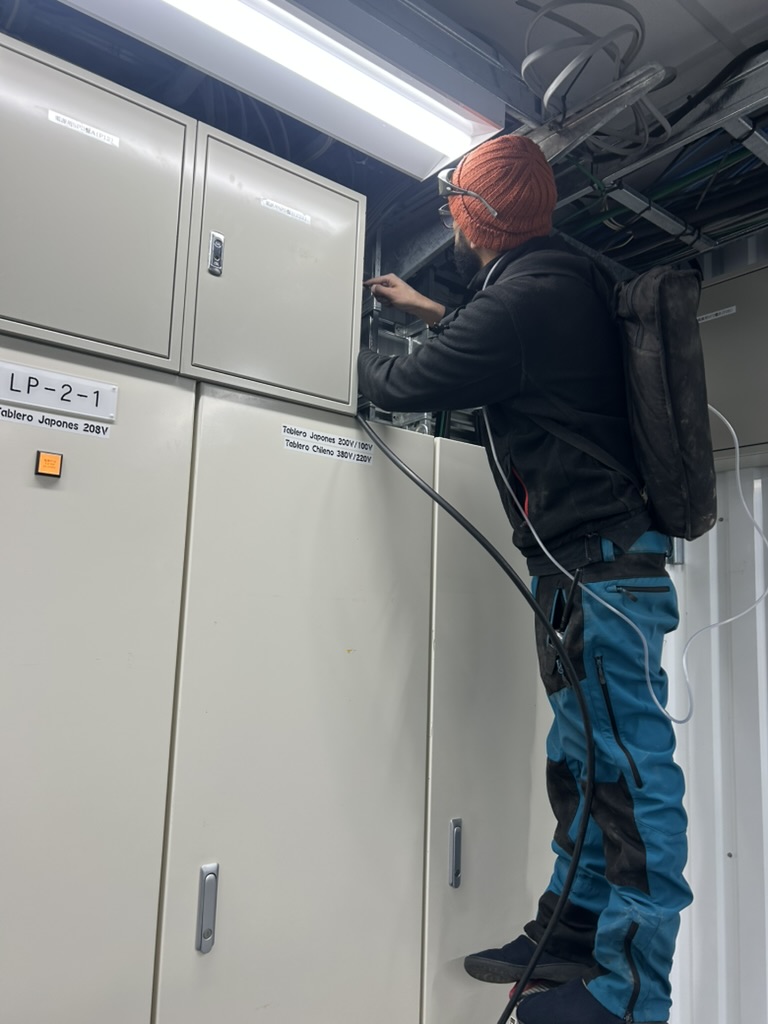
▲The author working with an Oxygen Cylinder |
Among my primary responsibilities is the leadership and comprehensive management of the electrical power generation system, which currently consists of two CUMMINS generators supplying all the energy required for observatory operations. Due to the extreme altitude at which TAO operates, approximately 5.640 meters above sea level, these generators experience a power derating of nearly 50%. This represents an exceptional and uncommon engineering challenge, as very few industrial facilities worldwide operate under comparable environmental conditions.
To ensure maximum reliability and availability of the electrical power supply, we have implemented a rigorous preventive and predictive maintenance program. Every 250 operating hours, the Engineering team performs comprehensive mechanical and electrical maintenance on the generators, following strict safety, quality, and operational reliability standards. Because electrical power is a critical resource for astronomical observations and the operation of scientific systems, the planning and execution of these maintenance activities are essential to the success of the project.
During my tenure at TAO, we have maintained a record of zero operational incidents related to the power generation system. Through continuous supervision, daily inspections, permanent monitoring of operational parameters, and proactive engineering management, the generators have consistently operated with high levels of efficiency, reliability, and availability, ensuring the uninterrupted energy supply required for the observatory’s scientific activities.

| |
▲ The author performing maitenance of the summit generator |
I am particularly proud to contribute to a project that combines cutting-edge scientific research with complex engineering challenges. Representing Chile in an international scientific initiative of this importance is both an honor and a significant responsibility.
Looking ahead, I hope to continue contributing to the success and development of the TAO Project for many years to come, while sharing my experience and supporting future generations of Chilean engineers who aspire to join and work at this prestigious observatory of the University of Tokyo, thereby strengthening the scientific and technological collaboration between Chile and Japan.
Francisco Espinoza
TAO Site Engineering Team
|