|
TAO Project |
|
The TAO project

|
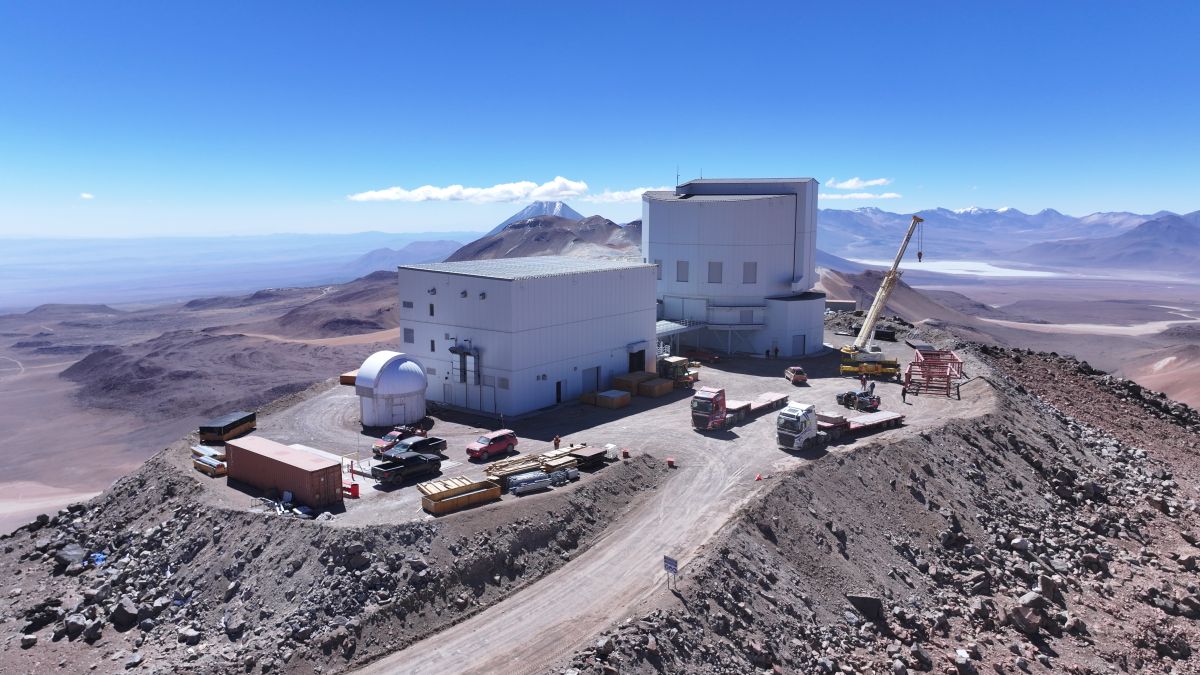
The TAO telescope takes a major step toward completion! Main structural components arrive at the summit.At the summit of Cerro Chajnantor, 5,640 m above sea level, where the TAO summit facility is located, construction of the 6.5-mTAO telescope is currently underway. From March to April 2026, the main structural components of the telescope, including the center section and the elevation disks, as well as the assembly stand used for telescope assembly, were successfully transported to the summit. As a result, all of the major structural components of the telescope are now at the summit. The next step is to assemble these components to complete the telescope’s main structure. After that, the primary mirror and its cell, the only major components yet to be transported, will be brought to the summit and installed.
Overview of the TAO telescopeThe University of Tokyo Atacama Observatory (TAO) telescope is a large alt-azimuth-mounted optical-infrared telescope with a 6.5-m primary mirror. The telescope has four instrument ports: two at the Nasmyth foci and two at the bent-Cassegrain foci. The Ritchey–Chrétien optical design provides a wide field of view with a diameter of 25 arcmin at each focus. The optical tube is approximately 10 m long, with semicircular elevation disks on both sides. The elevation disks move along the side supports to change the elevation angle, while the entire telescope rotates in azimuth on the azimuth turntable, approximately 12 m in diameter. Because the telescope uses an alt-azimuth mount, the orientation of the image on the focal plane changes as the telescope tracks a celestial object. To compensate for this image rotation, the entire observing instrument mounted at each focal point is rotated. Standing approximately 15 m tall and weighing nearly 200 tons, the TAO telescope is, in a sense, a giant precision instrument.
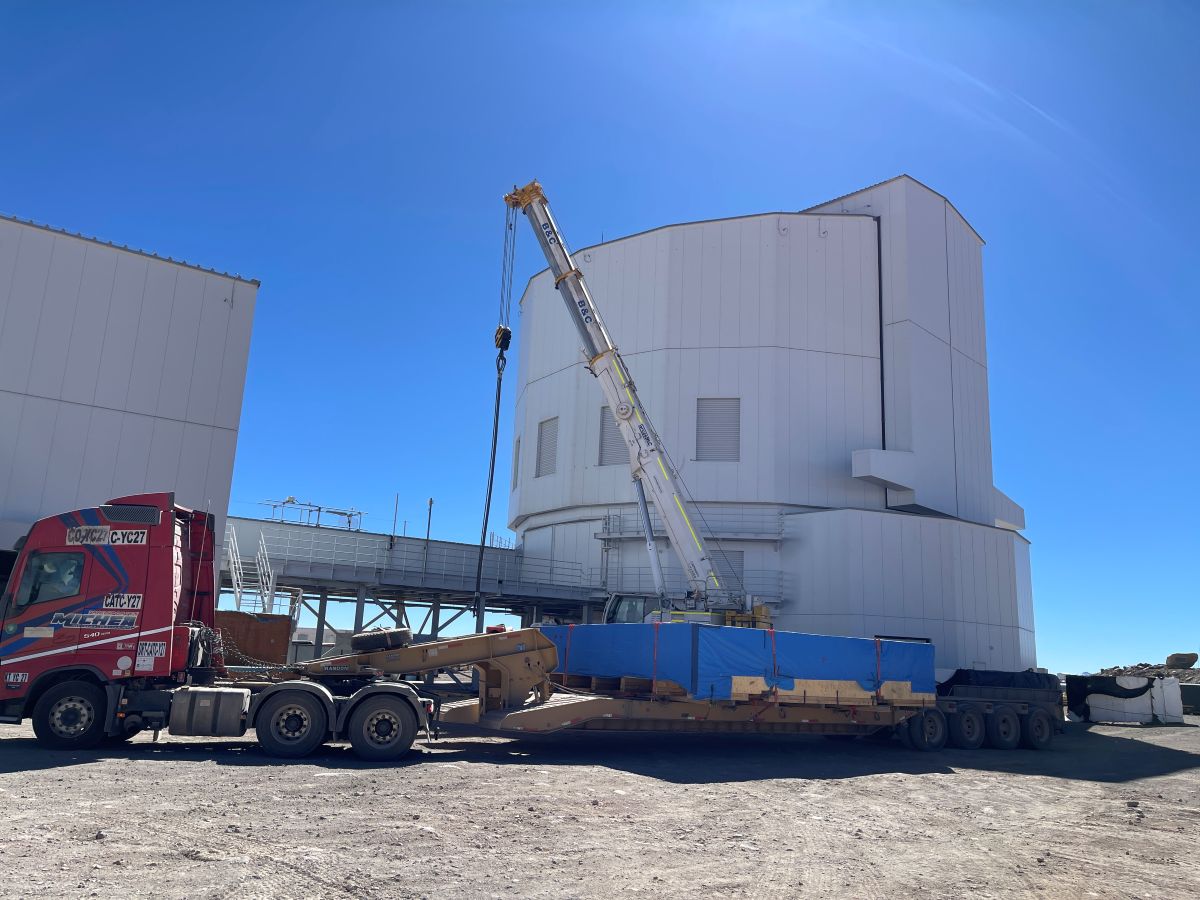
Transportation of the center section and the assembly standThe center section and the assembly stand, which had been stored at the 5000-m-altitude yard since 2021, were transported to the summit in March 2026. The transportation took three days. The assembly stand was transported on the first day, followed by the two halves of the center section on the subsequent two days. The center section consists of two halves of an octagonal ring. Each half is a large precision component measuring approximately 8 m in length and weighing 7.7 tons. To ensure safe transportation, each half was transported separately on consecutive days. During the transportation work, we set out early each morning, before sunrise. The transportation crew, the telescope construction team, and other personnel gathered near the town of San Pedro de Atacama before departing for the summit together in a convoy for safety. Each morning before departure, we held a transportation briefing in the darkness before dawn, with no streetlights in sight. As the team included both Japanese and Chilean staff, the briefing was conducted in both Japanese and Spanish to ensure that there were no misunderstandings.
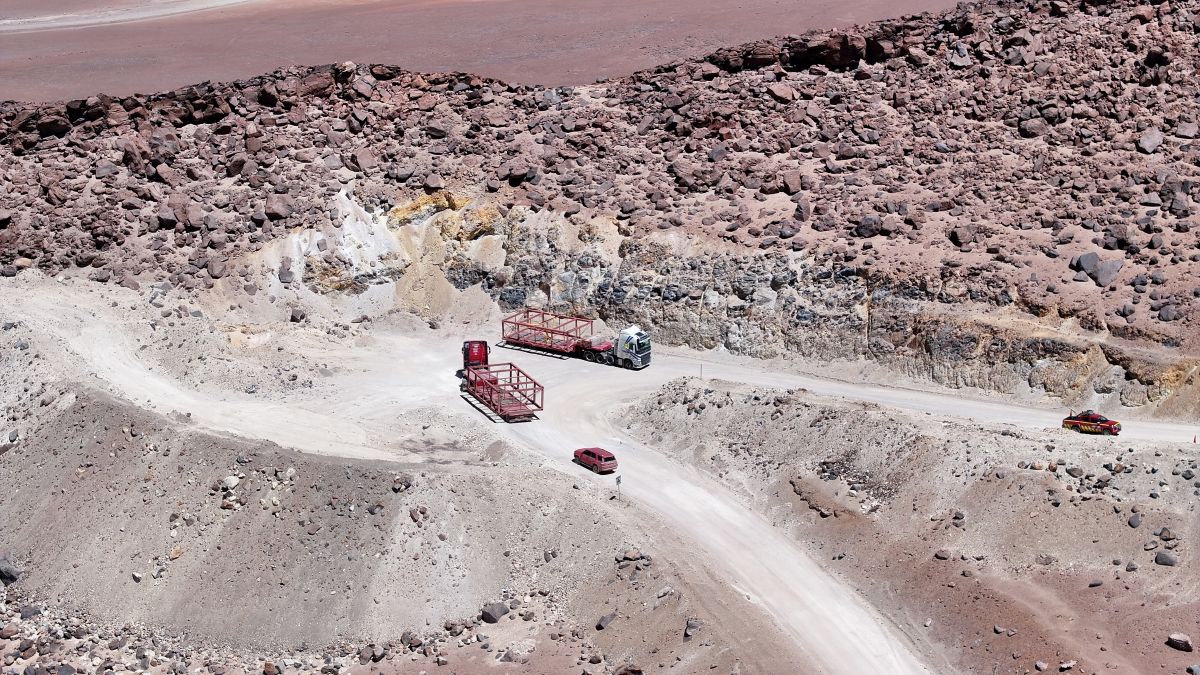
Even after arriving at the 5000-m-altitude yard, the transportation didn’t begin immediately. A series of final preparations was carried out before departure. First, a final inspection was carried out to ensure that there were no fallen rocks on the road and that the trailer could pass through each curve safely. At locations where the road was too narrow, part of the embankment was removed to provide sufficient clearance for the cargo to pass safely. Meanwhile, the cargo was loaded onto the trailer using a crane at the yard. Because of the high altitude and thin air, it took more than an hour to start the crane's engine. Nevertheless, the loading operation was completed successfully. After loading, the trailer carrying the cargo departed for the summit in a convoy, escorted by three pickup trucks in front and behind.
The road to the summit includes several hairpin curves. Throughout the transportation, walkie-talkies were used at key points to maintain communication among the trailer, the lead vehicle, and the rear vehicle to ensure safety. The convoy proceeded slowly and carefully throughout the journey. After arriving at the summit, the cargo was unloaded near the enclosure building. The transportation of the center section and the assembly stand was successfully completed over three consecutive days. Each day's operation lasted up to six hours, from early morning until around noon.
Transportation of the elevation disks and the cell flangeThe elevation disks and the cell flange departed from the Port of Kobe in February 2026 and arrived at the Port of Iquique, Chile in March. The cell flange was transported from the port to the summit within a few days. Because the elevation disks are large precision components, each approximately 6.5 m long and weighing 14 tons, they were transported in a convoy under local police escort to ensure safe transportation on public roads. From the 5000-m-altitude yard to the summit, the two elevation disks were carefully transported one at a time over two days, following the same procedures used for the center section. The elevation disks arrived safely at the summit in mid-April, approximately one week after departing from the Port of Iquique. With this, all of the large components required for the assembly of the TAO telescope are now at the summit, except for the primary mirror and the primary mirror cell. The next step is to assemble these components to complete the telescope structure. After that, the primary mirror and the primary mirror cell will be transported to the summit and installed.
Copyright(c) 2026 TAO Project, Institute of Astronomy, Graduate School of Science, University of Tokyo
|
||||||||||||||||